
If you are wondering how to start a wedding content creator business, begin with the parts couples can understand and buy. You do not need a giant agency setup. You need a specific service, a repeatable client experience and a system that makes each wedding easier to prepare for than the last.
1. Define what your wedding content creator service actually includes
Couples may understand photography and videography immediately, but wedding content creation is still a newer service for many buyers. Your first job is to make the offer easy to understand.
Describe the format, not just the feeling. Explain whether you capture vertical smartphone clips, candid behind-the-scenes moments, short-form social footage, raw clips, edited reels, same-day previews or a combination. Be clear that your work complements the professional photographer and videographer rather than replacing them.
Start with one ideal client
It is easier to write packages when you know who they are for. You might focus on couples who want immediate social-ready footage, destination weddings, intimate weddings, fashion-led celebrations or clients who value candid behind-the-scenes moments.
2. Build simple wedding content creator packages
New businesses often create too many options. Two or three clear packages are usually easier to sell and easier to deliver. A useful package structure can change by coverage time, deliverables and editing level.
Whatever you name the packages, state the practical difference between them. Couples should be able to compare coverage, deliverables and turnaround without decoding marketing language.
3. Work out your wedding content creator pricing
Pricing should cover more than the hours you are physically at the wedding. Include preparation, client communication, travel, filming time, editing, subscriptions, equipment, admin, payment fees, taxes where applicable and the profit your business needs to remain sustainable.
A simple pricing principle
Calculate the full time and cost of delivering a package first. Then decide the profit margin and positioning you want. Starting with a competitor's number and working backwards can leave important costs invisible.
Your market, experience, portfolio quality and local wedding economy all affect what clients are willing to pay. Review competitors for context, but build your own numbers from your own service.
4. Create a portfolio that explains your value quickly
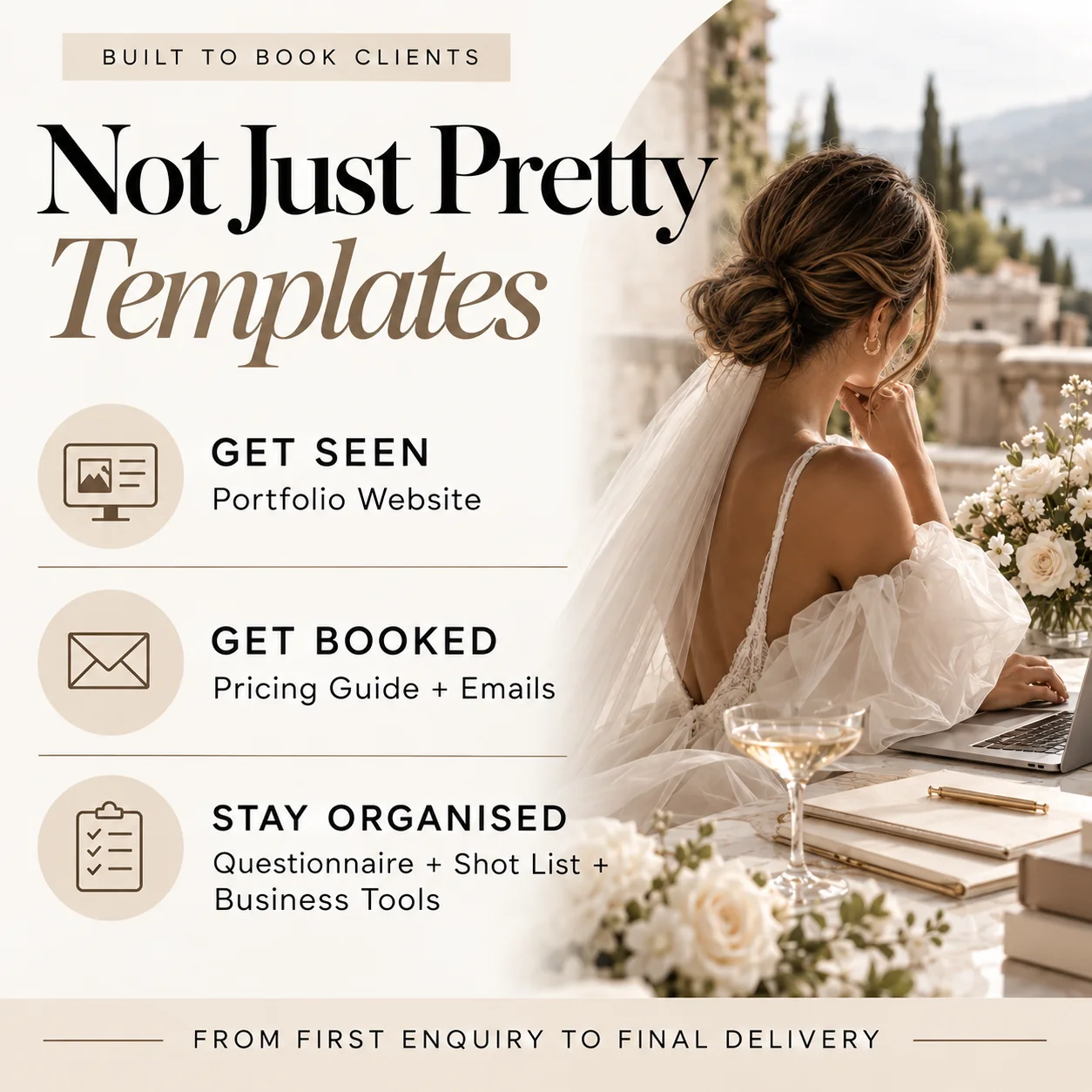
A strong wedding content creator portfolio should show both the visual result and the buying information a couple needs. Your website or portfolio page should answer: What do you capture? What is your style? What packages are available? What happens after enquiry? How quickly is content delivered? How do they contact you?
Use real examples whenever you have permission. Until your portfolio grows, a clean structure and clear copy can make a small body of work feel much more professional.
5. Build a client booking workflow before enquiries arrive
A repeatable client workflow keeps small details from becoming last-minute problems. Map the path from first enquiry to final delivery.
- Enquiry received
- Availability and package reply
- Booking confirmation and required paperwork
- Welcome information
- Pre-wedding questionnaire
- Timeline and priority review
- Wedding-day coverage
- Content delivery
- Review or testimonial request
Prepare the emails and documents once, then personalise them for each couple. That keeps communication warm without rewriting the same logistics every week.
6. Use a wedding content creator shot list without filming mechanically
A shot list is a safety net, not a script. The point is to protect the moments that matter while leaving room for spontaneous content.
Build your list around phases of the day: getting ready, details, arrivals, ceremony, reactions, portraits, cocktail hour, reception, speeches, first dances and exit. Then add the couple-specific priorities from your questionnaire, such as sentimental objects, important relatives, cultural traditions or surprises.
7. Decide exactly how content delivery works
Set expectations before the wedding. State how raw clips are delivered, which edited pieces are included, approximate turnaround ranges, how long files remain available and whether revisions are included. A clear delivery process reduces post-wedding questions and makes the service feel more established.
8. Set up simple systems for pricing, bookings and payments
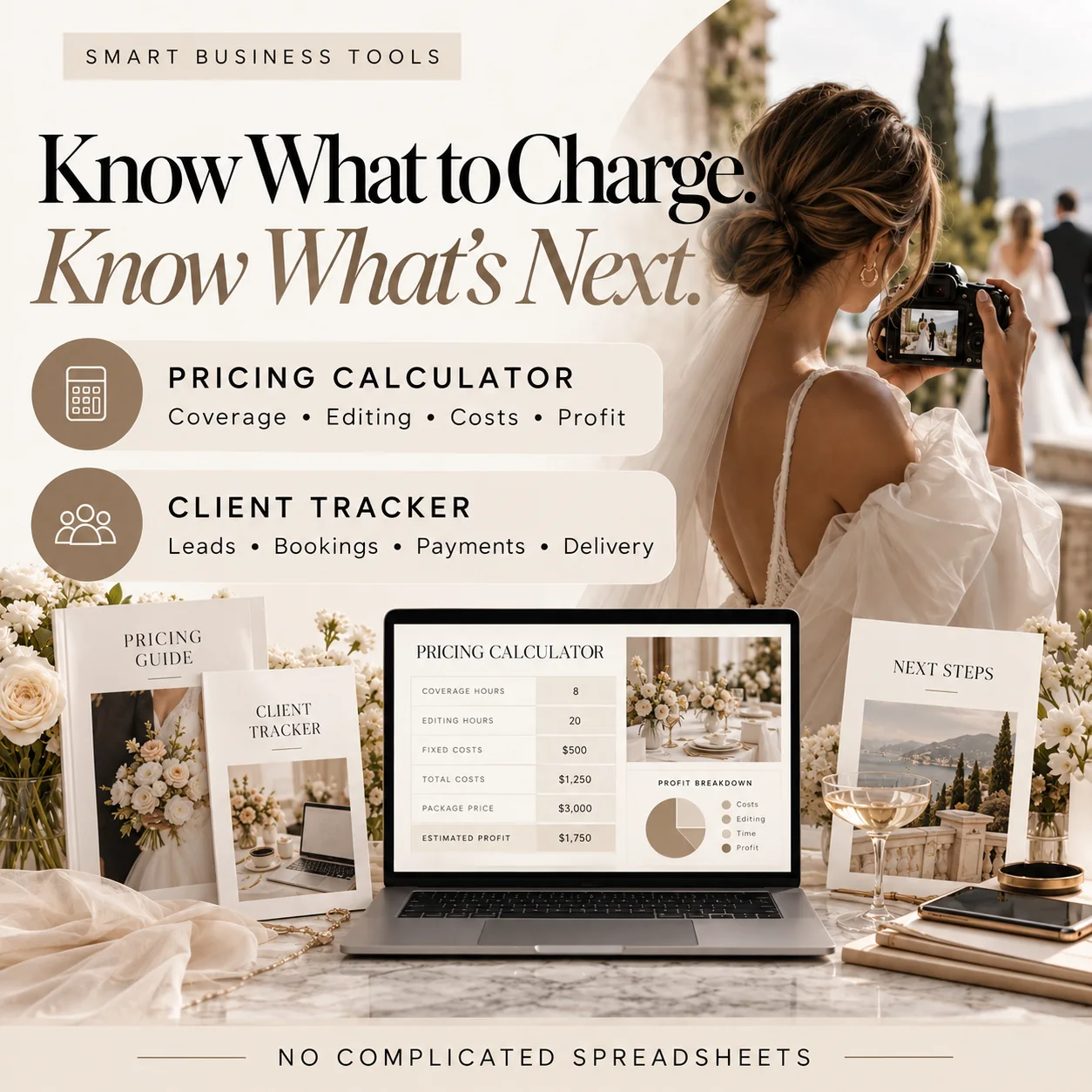
You do not need complicated software to begin. A simple booking tracker can show every lead, booking, payment and delivery status. A pricing calculator can keep package decisions tied to actual costs. These two tools alone prevent many common early-stage admin mistakes.
Want the system already built?
The Lunora Studio Wedding Content Creator Business Starter Kit includes the client-facing templates and business tools covered in this guide: portfolio layout, pricing guide, welcome guide, questionnaire, shot list, 15 client emails, pricing calculator and booking tracker.
Explore the Wedding Creator Kit ↗What should a new wedding content creator prepare first?
If you only do five things, make them these: define the service, create two or three packages, calculate your pricing, build an enquiry-to-delivery workflow and prepare a questionnaire plus flexible shot list. Those pieces give you enough structure to begin taking real enquiries without pretending every detail is already solved.
Wedding content creator business FAQ
Do wedding content creators need a portfolio?
A portfolio is one of the clearest ways to show what the service looks like. It can start small, but it should explain your visual style, services, process and how couples can enquire.
How many packages should I offer?
Two or three clear packages are usually enough for a new business. Add-ons can handle extra coverage or deliverables without making the main offer confusing.
What should I ask in a client questionnaire?
Ask for timeline information, important people, must-capture moments, surprises, cultural or religious moments, sentimental details, social-sharing preferences and special requests.
What should I track for each booking?
At minimum, track client contact details, wedding date, package, enquiry status, payment status, key deadlines and final delivery status.